Blogs

Rolling Reserve in Payment Processing: What Merchants Must Know

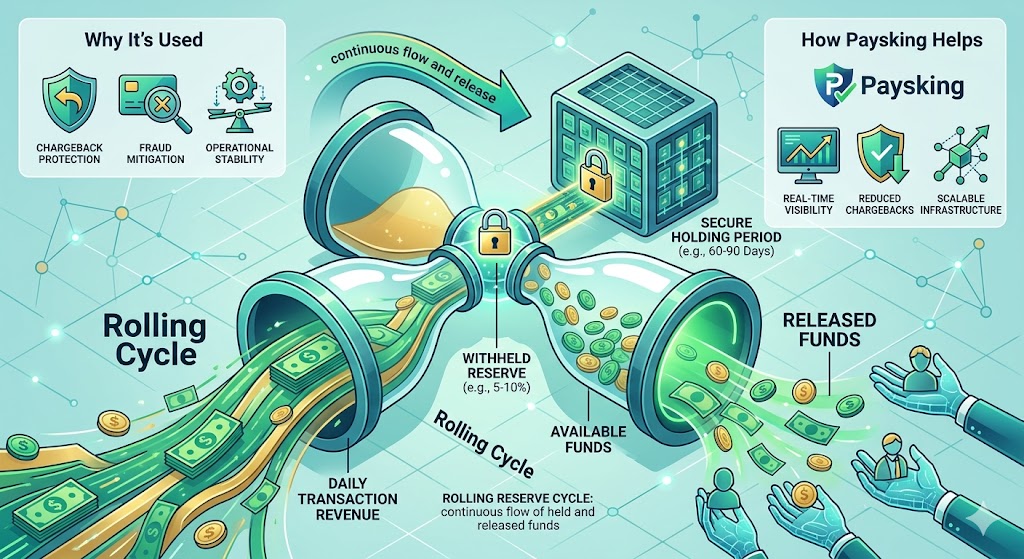
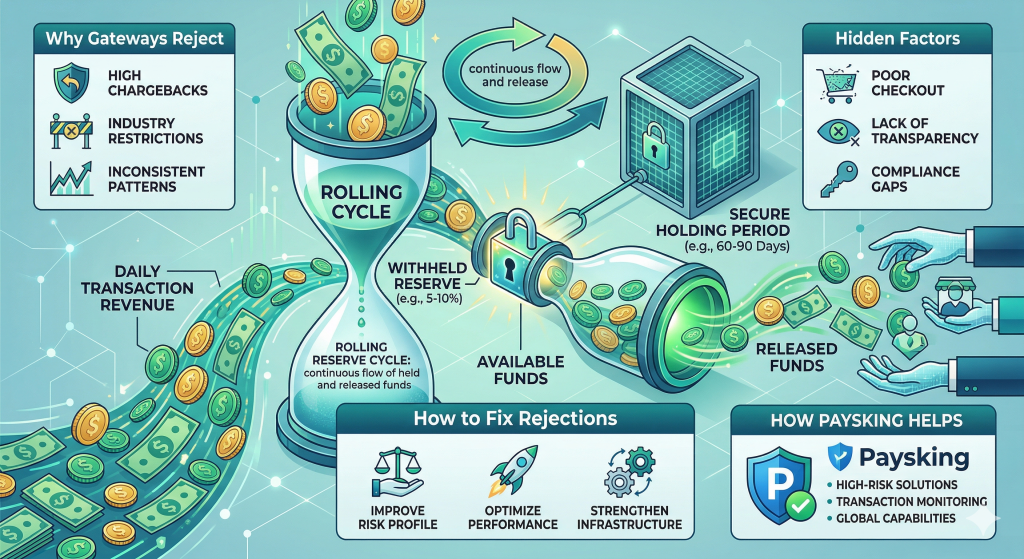
For many merchants, especially those operating in online or high-risk industries, payment processing comes with terms that are not always immediately clear. One of the most commonly misunderstood concepts is the rolling reserve. Merchants often encounter rolling reserves after onboarding with a payment provider, sometimes without fully understanding how it impacts cash flow and operations. A rolling reserve is not a penalty—it is a risk management mechanism used by payment providers to ensure stability within the payment ecosystem. With Paysking, businesses gain access to transparent and scalable payment infrastructure that helps manage rolling reserves while maintaining smooth payment operations. Understanding how rolling reserves work allows merchants to plan effectively and avoid operational disruptions. What Is a Rolling Reserve in Payment Processing A rolling reserve is a percentage of a merchant’s transaction revenue that is temporarily held by a payment processor. Instead of receiving full payouts immediately, a portion of funds is withheld for a specific period before being released. How It Works For example: This structure creates a rolling cycle where funds are continuously held and released. Rolling reserves are especially common for businesses classified as high risk, as explained in👉 https://paysking.com/what-is-a-high-risk-merchant-account-and-why-might-your-business-need-one/ Why Payment Providers Use Rolling Reserves Rolling reserves are used to manage financial risk and protect payment ecosystems. Chargeback Protection If customers dispute transactions, payment providers need funds available to cover refunds and chargebacks. Chargeback prevention plays a key role in reducing reserve requirements, as outlined in👉 https://paysking.com/chargeback-prevention-strategies-for-high-risk-businesses/ Fraud Risk Mitigation High-risk industries may experience higher fraud rates. Reserves provide financial protection against potential losses. Operational Stability Reserves ensure that payment providers can maintain stable operations even during disputes or financial fluctuations. When Rolling Reserves Are Applied Not all businesses are subject to rolling reserves. They are typically applied under specific conditions. High-Risk Industries Industries with higher dispute or refund rates are more likely to have reserves. These industries often face challenges similar to those discussed in👉 https://paysking.com/top-payment-challenges-in-the-crypto-forex-gaming-industries/ New Businesses Without Processing History Businesses with limited transaction history may be considered higher risk. High Transaction Volumes Large transaction volumes increase exposure to potential disputes. Types of Rolling Reserve Structures Rolling reserves can vary based on business risk profile. Fixed Percentage Rolling Reserve A set percentage of each transaction is held and released after a defined period. Tiered Reserve Structure Reserve percentages may change based on transaction performance and risk levels. Dynamic Reserve Models Modern payment systems adjust reserve requirements based on real-time data. Understanding these structures helps merchants manage financial planning effectively. Impact of Rolling Reserves on Cash Flow Rolling reserves directly affect how merchants manage finances. Reduced Immediate Liquidity A portion of revenue is temporarily unavailable, requiring careful cash flow planning. Predictable Release Cycles Although funds are held, they are released on a predictable schedule. Financial Planning Importance Merchants must plan expenses, operations, and growth strategies around reserve structures. Modern payment platforms provide visibility into reserves, aligned with👉 https://paysking.com/payment-platform-for-businesses-paysking/ How to Reduce Rolling Reserve Requirements Merchants can lower reserve requirements over time by demonstrating stability. Maintain Low Chargeback Ratios Fewer disputes reduce perceived risk. Improve Payment Security Secure systems reduce fraud and increase trust. Security frameworks align with👉 https://paysking.com/secure-payment-processing-fraud-prevention-paysking/ Optimize Payment Performance Higher transaction success rates improve merchant reliability. Performance optimization aligns with👉 https://paysking.com/how-to-optimize-card-payment-processing-for-better-conversion-rates/ Build Processing History Consistent performance over time helps reduce risk classification. Role of Technology in Managing Rolling Reserves Modern payment infrastructure improves reserve management. Real-Time Reporting Merchants can track reserve balances and release schedules. Transaction Monitoring Monitoring helps identify risks and improve performance. Scalable Payment Systems Growing businesses require infrastructure that supports increasing transaction volume. Scalable systems align with👉 https://paysking.com/scalable-payment-gateway-business-growth-paysking/ Technology helps merchants manage reserves more effectively. How Paysking Helps Merchants Manage Rolling Reserves Paysking provides payment infrastructure designed to simplify reserve management and improve financial visibility. Paysking helps businesses: These capabilities allow merchants to operate confidently while managing rolling reserve structures. Paysking’s ecosystem ensures transparency and operational stability. Common Misconceptions About Rolling Reserves “Rolling Reserves Are Fees” Rolling reserves are not fees—they are temporary holds that are released over time. “Funds Are Lost” Funds are not lost; they are held as a security measure and returned after the reserve period. “Only High-Risk Businesses Have Reserves” While more common in high-risk industries, reserves may also apply to new or rapidly growing businesses. Future of Reserve Management in Payment Processing Payment ecosystems are becoming more transparent and technology-driven. Future trends include: Businesses adopting modern payment systems will benefit from more flexible reserve structures. Manage Your Payments with Confidence Using Paysking Rolling reserves are an important part of payment processing, especially for businesses operating in complex or high-risk environments. With Paysking, merchants gain access to secure, scalable, and transparent payment infrastructure designed to support stable operations and effective reserve management. Manage your payments with confidence using Paysking and build a strong financial foundation for your business. Hashtags #RollingReserve #PaymentProcessing #MerchantAccounts #FintechSolutions #Paysking

Rolling Reserve in Payment Processing: What Merchants Must Know Read Post »

How to Accept International Card Payments on Your Website

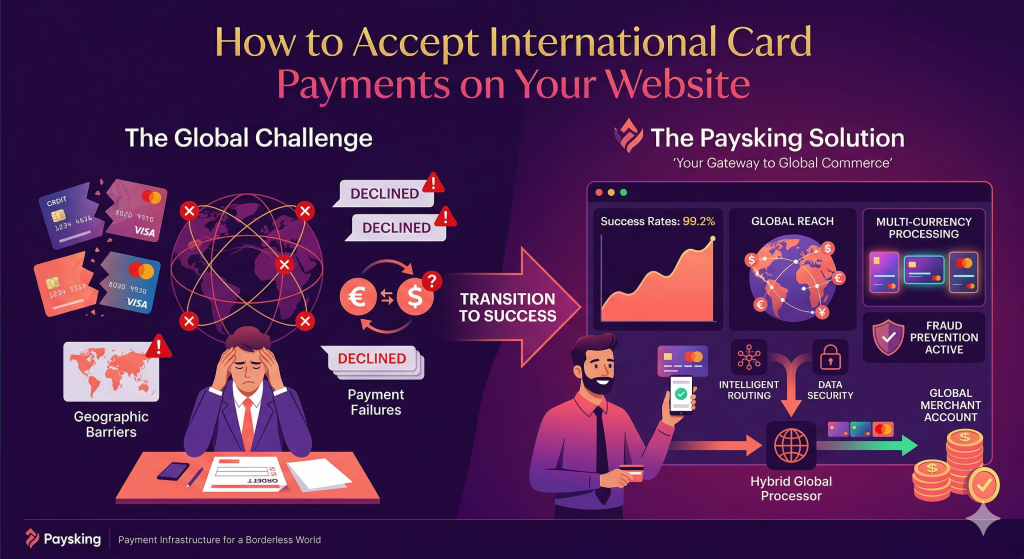
Expanding your business beyond borders is no longer optional—it’s a necessity in today’s digital economy. Customers from different countries expect seamless payment experiences, and businesses that fail to provide this often lose valuable opportunities. Accepting international card payments allows businesses to tap into global markets, increase revenue, and build a diverse customer base. However, processing cross-border payments involves more than just enabling credit and debit cards. It requires the right payment infrastructure, compliance readiness, and optimized checkout experience. With Paysking, businesses can accept international card payments efficiently while maintaining security, scalability, and transaction success. Understanding how to set up global payment acceptance is key to building a future-ready business. Why International Card Payments Matter Global commerce is growing rapidly, and customers expect businesses to support international transactions. Expanding Market Reach Accepting international payments allows businesses to serve customers worldwide without geographic limitations. Increasing Revenue Opportunities Global customers contribute significantly to business growth and revenue diversification. Improving Customer Experience Providing local currency payment options and seamless checkout improves customer satisfaction. Global payment infrastructure supports these capabilities, aligned with👉 https://paysking.com/payskings-global-coverage-seamless-cross-border-payment-solutions/ Challenges of Accepting International Payments While the benefits are significant, international payments come with challenges. Currency Conversion Complexity Businesses must handle multiple currencies and exchange rates. Payment Authorization Issues Cross-border transactions may face higher decline rates due to routing inefficiencies. Compliance and Regulatory Requirements Different regions have different payment regulations and compliance standards. Understanding these challenges is essential for building effective payment systems. Key Requirements for Accepting International Card Payments Businesses must implement several components to support global payment acceptance. Multi-Currency Processing Allow customers to pay in their local currency while maintaining centralized reporting. Payment Gateway Integration A reliable payment gateway ensures secure and efficient transaction processing. Modern platforms align with👉 https://paysking.com/payment-platform-for-businesses-paysking/ Secure Payment Infrastructure Protecting customer data is critical for building trust and maintaining compliance. Security practices align with👉 https://paysking.com/secure-payment-processing-fraud-prevention-paysking/ Global Payment Routing Optimized routing improves approval rates and reduces transaction failures. Step-by-Step Guide to Accept International Card Payments Setting up international payment acceptance requires a structured approach. Step 1: Choose a Global Payment Provider Select a provider that supports international transactions, multi-currency processing, and high approval rates. Step 2: Enable Multi-Currency Support Configure your payment system to accept payments in multiple currencies. Step 3: Integrate Payment Gateway Integrate the payment gateway into your website using APIs or plugins. Step 4: Optimize Checkout Experience Ensure checkout is fast, simple, and user-friendly. Step 5: Implement Fraud Prevention Use advanced monitoring systems to detect and prevent fraudulent transactions. Optimizing Checkout for International Customers Checkout optimization plays a critical role in improving payment success. Simplify Payment Flow Reduce unnecessary steps to improve conversion rates. Provide Clear Pricing Display prices in local currency to avoid confusion. Improve Payment Performance Optimized payment processing improves approval rates, as explained in👉 https://paysking.com/how-to-optimize-card-payment-processing-for-better-conversion-rates/ A seamless checkout experience increases customer trust and satisfaction. Managing Payment Security and Compliance Security and compliance are essential for international payments. Data Protection Standards Protecting sensitive customer data builds trust and ensures compliance. Fraud Prevention Systems Advanced monitoring helps reduce fraud risk. Regulatory Compliance Businesses must comply with regional payment regulations. Secure infrastructure supports these requirements effectively. Improving Transaction Success Rates High transaction success rates are essential for maximizing revenue. Intelligent Payment Routing Routing transactions through optimal channels improves approval rates. Real-Time Monitoring Monitoring transactions helps identify and resolve issues quickly. Scalable Payment Infrastructure Growing businesses require systems that handle increasing transaction volume. Scalable systems align with👉 https://paysking.com/scalable-payment-gateway-business-growth-paysking/ How Paysking Supports Global Payment Acceptance Paysking provides payment infrastructure designed to support international card payments. Paysking enables businesses to: These capabilities help businesses expand globally without payment limitations. Paysking’s ecosystem ensures reliable and efficient payment processing. Future Trends in International Payments Global payment systems continue evolving. Future trends include: Businesses adopting modern payment systems today will gain a competitive advantage. Go Global with Paysking Accepting international card payments is essential for business growth in the digital economy. With Paysking, businesses gain access to secure, scalable, and global-ready payment infrastructure designed to support international transactions. Go global with Paysking and unlock seamless international card payment acceptance for your business. Hashtags #InternationalPayments #CardPayments #GlobalBusiness #FintechSolutions #Paysking

How to Accept International Card Payments on Your Website Read Post »

How High-Risk Payment Gateways Approve Businesses That Banks Reject

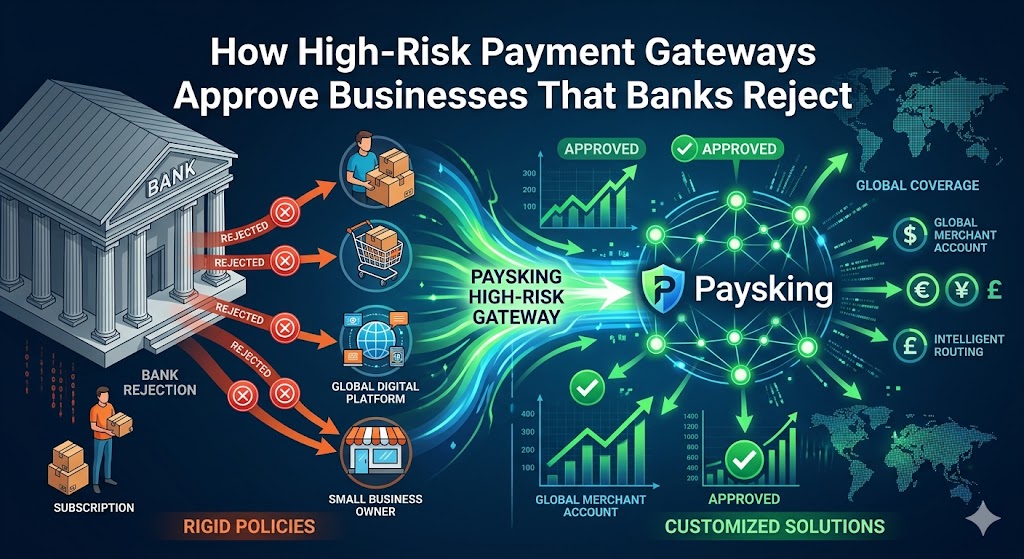
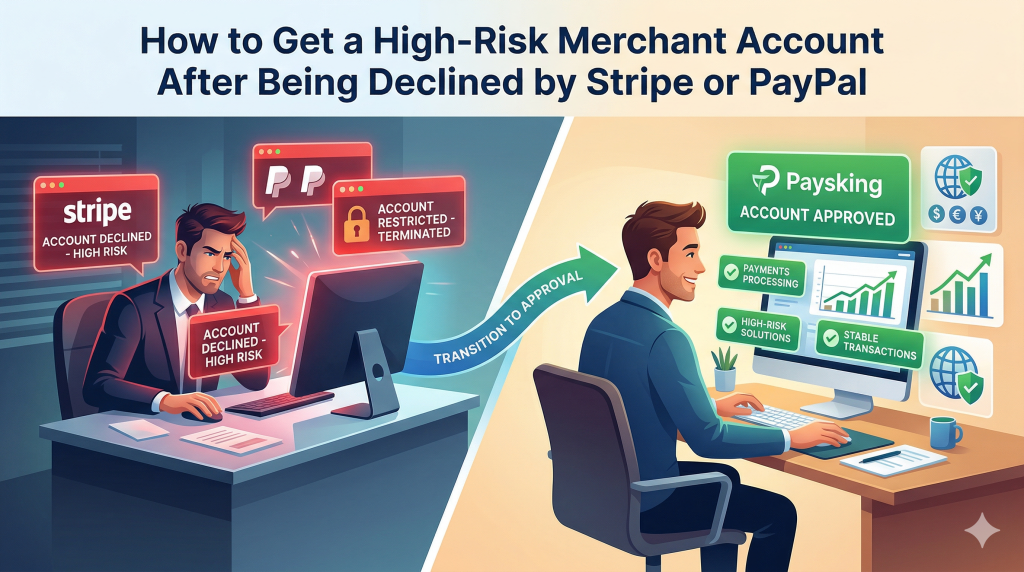
Many businesses in today’s digital economy face a common challenge—being rejected by traditional banks when applying for payment processing services. These rejections can disrupt operations, delay growth, and create uncertainty for businesses that rely on online payments. However, rejection by a bank does not mean a business is unviable. It simply means the business does not fit within traditional risk frameworks. High-risk payment gateways exist to bridge this gap. With Paysking, businesses can access payment infrastructure designed specifically to support industries and business models that fall outside conventional banking systems. Understanding how high-risk payment gateways approve businesses provides clarity on how modern payment ecosystems are evolving. Why Traditional Banks Reject Certain Businesses Banks operate under strict risk management frameworks that limit their ability to support certain industries. Conservative Risk Policies Banks prioritize low-risk, predictable transaction environments. Businesses with variable transaction patterns or higher dispute rates often fall outside acceptable risk thresholds. Industry Restrictions Certain industries are considered high risk due to regulatory complexity or customer behavior patterns. These include: Understanding high-risk classification helps explain these restrictions, as outlined in👉 https://paysking.com/what-is-a-high-risk-merchant-account-and-why-might-your-business-need-one/ Compliance and Regulatory Pressure Banks must comply with strict financial regulations. Supporting high-risk businesses increases compliance complexity and operational burden. What Makes a Payment Gateway “High Risk” High-risk payment gateways are designed to support businesses that traditional providers cannot accommodate. Flexible Risk Assessment Models Unlike banks, high-risk gateways evaluate businesses based on detailed transaction data and operational context rather than rigid classifications. Specialized Industry Support High-risk gateways are built to support industries with unique payment needs, including those discussed in👉 https://paysking.com/top-payment-challenges-in-the-crypto-forex-gaming-industries/ Advanced Risk Management Systems Modern payment gateways use intelligent monitoring systems to manage transaction risk effectively. These capabilities allow gateways to approve businesses that banks reject. How High-Risk Payment Gateways Approve Businesses Approval processes for high-risk payment gateways are more dynamic and data-driven. Comprehensive Risk Evaluation Gateways analyze: This detailed analysis provides a more accurate risk profile. Intelligent Transaction Monitoring Real-time monitoring helps detect and prevent fraud, reducing overall risk. Security systems align with practices described in👉 https://paysking.com/secure-payment-processing-fraud-prevention-paysking/ Customized Payment Solutions High-risk gateways tailor payment solutions based on business needs, improving approval chances and transaction success. Role of Payment Infrastructure in Approval Payment infrastructure plays a central role in enabling approvals. Reliable systems ensure: Businesses using advanced payment platforms benefit from improved approval rates. Modern infrastructure aligns with systems described in👉 https://paysking.com/payment-platform-for-businesses-paysking/ Risk Management Strategies Used by High-Risk Gateways High-risk payment gateways use several strategies to manage transaction risk. Rolling Reserves and Risk Controls Gateways may implement reserve structures to protect against chargebacks and fraud. Intelligent Routing Transactions are routed through optimized channels to improve approval rates. Real-Time Analytics Continuous monitoring helps identify trends and adjust risk strategies dynamically. Scalable infrastructure supports these capabilities, aligned with👉 https://paysking.com/scalable-payment-gateway-business-growth-paysking/ Benefits of High-Risk Payment Gateways for Businesses High-risk payment gateways provide several advantages for businesses. Higher Approval Rates Businesses rejected by traditional banks can access payment processing solutions. Support for Global Transactions High-risk gateways support multi-currency and international payments. Global capabilities align with👉 https://paysking.com/payskings-global-coverage-seamless-cross-border-payment-solutions/ Improved Transaction Success Optimized payment routing and monitoring improve approval rates and reduce failures. Businesses often enhance performance using strategies outlined in👉 https://paysking.com/how-to-optimize-card-payment-processing-for-better-conversion-rates/ Common Misconceptions About High-Risk Payment Gateways There are several misconceptions about high-risk payment solutions. “High Risk Means Unstable” In reality, high-risk gateways are designed to manage complex payment environments effectively. “Approval Means No Compliance” High-risk gateways still maintain strong compliance and security standards. “Only Large Businesses Qualify” Businesses of all sizes can benefit from high-risk payment solutions. How Paysking Approves and Supports Businesses Paysking provides payment infrastructure designed to support businesses that face rejection from traditional payment providers. Paysking helps businesses: These capabilities enable businesses to operate confidently and grow without payment limitations. Paysking’s ecosystem is built to handle complex and evolving payment environments. The Future of High-Risk Payment Processing Payment ecosystems are becoming more flexible and technology-driven. Future payment systems will emphasize: High-risk payment gateways will continue playing a critical role in supporting digital business growth. Get Approved with Paysking Being rejected by a bank does not mean your business cannot succeed. With Paysking, businesses gain access to secure, scalable, and high-risk-ready payment infrastructure designed to support approval and long-term growth. Get approved with Paysking and unlock reliable payment processing for your business. Hashtags #HighRiskPayments #MerchantApproval #FintechSolutions #PaymentGateway #Paysking

How High-Risk Payment Gateways Approve Businesses That Banks Reject Read Post »

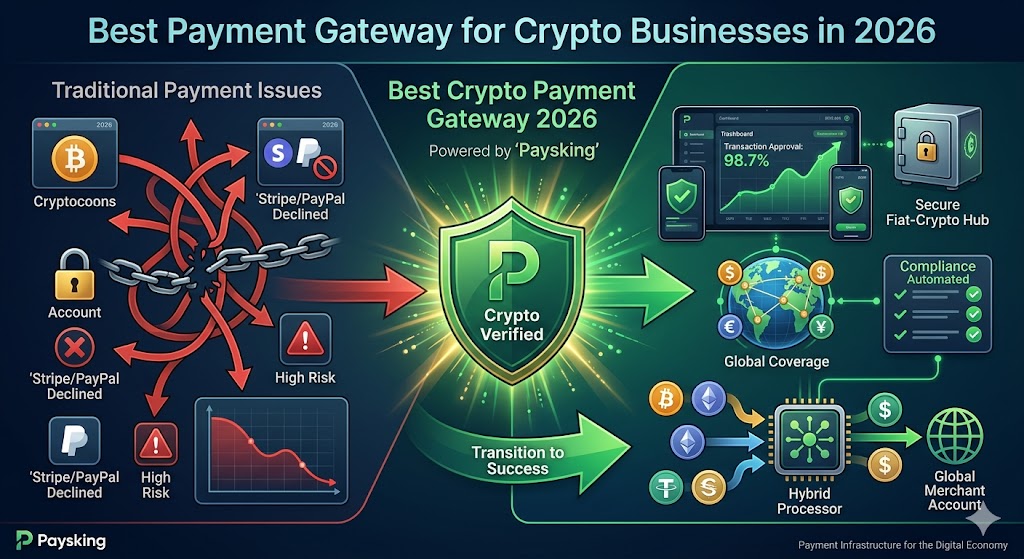
Best Payment Gateway for Crypto Businesses in 2026

Crypto businesses are no longer operating on the fringes of the financial system. In 2026, they are becoming a central part of the global digital economy. From exchanges and trading platforms to blockchain-based services and digital assets, crypto businesses require advanced payment infrastructure to support their growth. However, payment processing in the crypto space comes with unique challenges. Regulatory uncertainty, transaction volatility, and high-risk classification make it difficult for many businesses to access reliable payment gateways. With Paysking, crypto businesses gain access to payment infrastructure designed to handle complex, high-risk, and global payment environments. Choosing the right payment gateway is essential for ensuring compliance, improving transaction success, and supporting long-term scalability. Why Crypto Businesses Need Specialized Payment Gateways Crypto businesses operate in a fundamentally different environment compared to traditional businesses. High-Risk Classification Most crypto businesses are categorized as high risk due to regulatory complexity, transaction patterns, and global customer bases. Understanding high-risk classification is essential, as explained in👉 https://paysking.com/what-is-a-high-risk-merchant-account-and-why-might-your-business-need-one/ Global and Cross-Border Transactions Crypto platforms often serve customers worldwide, requiring multi-currency support and global payment capabilities. Global infrastructure plays a key role, aligned with👉 https://paysking.com/payskings-global-coverage-seamless-cross-border-payment-solutions/ Complex Payment Flows Crypto businesses handle both fiat and digital asset transactions, requiring integrated payment systems. These complexities make standard payment gateways insufficient. Key Features of the Best Crypto Payment Gateway Selecting the right payment gateway requires evaluating features that support crypto-specific requirements. Multi-Currency Processing Crypto businesses must handle multiple fiat currencies alongside digital assets. Multi-currency support improves customer experience and transaction success. Secure Payment Infrastructure Security is critical in crypto payments. Payment gateways must protect both fiat transactions and digital assets. Secure infrastructure aligns with practices discussed in👉 https://paysking.com/secure-payment-processing-fraud-prevention-paysking/ Real-Time Payment Monitoring Crypto transactions require continuous monitoring to detect fraud and ensure compliance. Scalable Payment Systems As crypto businesses grow, payment systems must handle increasing transaction volumes. Scalable infrastructure supports growth, as outlined in👉 https://paysking.com/scalable-payment-gateway-business-growth-paysking/ Compliance and Regulatory Considerations Compliance is one of the most important aspects of crypto payment processing. Evolving Regulations Crypto regulations vary across jurisdictions and continue evolving. Businesses must remain adaptable. Anti-Money Laundering (AML) Requirements Crypto businesses must implement monitoring systems to prevent illicit financial activity. Payment Network Compliance Businesses must comply with card network rules when processing fiat payments. Understanding compliance requirements is essential for sustainable operations. Improving Payment Performance for Crypto Businesses Payment performance directly impacts user experience and revenue. Reducing Transaction Failures Optimized payment routing improves approval rates and reduces failed transactions. Businesses improve performance using strategies outlined in👉 https://paysking.com/how-to-optimize-card-payment-processing-for-better-conversion-rates/ Enhancing Checkout Experience Fast and reliable payments improve customer satisfaction. Managing High Transaction Volumes Crypto platforms often experience spikes in transaction volume, requiring stable payment infrastructure. Challenges in Crypto Payment Processing Crypto businesses face several operational challenges. Limited Payment Provider Support Many traditional payment providers restrict crypto-related businesses. High Compliance Requirements Regulatory complexity increases operational overhead. Transaction Volatility Crypto price fluctuations add complexity to payment processing. These challenges require specialized payment solutions. How Paysking Supports Crypto Businesses Paysking provides payment gateway solutions designed to support crypto businesses. Paysking enables businesses to: These capabilities help crypto businesses operate confidently in complex payment environments. Paysking’s platform integrates seamlessly with modern payment systems. Integration with Broader Payment Ecosystems Crypto payment gateways must integrate with traditional payment systems. Modern payment platforms support: Integrated systems provide flexibility and operational efficiency. This approach aligns with platforms described in👉 https://paysking.com/payment-platform-for-businesses-paysking/ Future Trends in Crypto Payment Gateways The crypto payment landscape will continue evolving. Future payment systems will focus on: Businesses adopting modern payment gateways today will gain a competitive advantage. Crypto payments will become a standard part of digital commerce. Power Your Crypto Business with Paysking Crypto businesses require payment gateways that are secure, scalable, and compliant. With Paysking, businesses gain access to advanced payment infrastructure designed to support high-risk industries and global transactions. Power your crypto business with Paysking and build a reliable payment system for the future of digital finance. Hashtags #CryptoPayments #PaymentGateway #BlockchainPayments #FintechInnovation #Paysking

Best Payment Gateway for Crypto Businesses in 2026 Read Post »

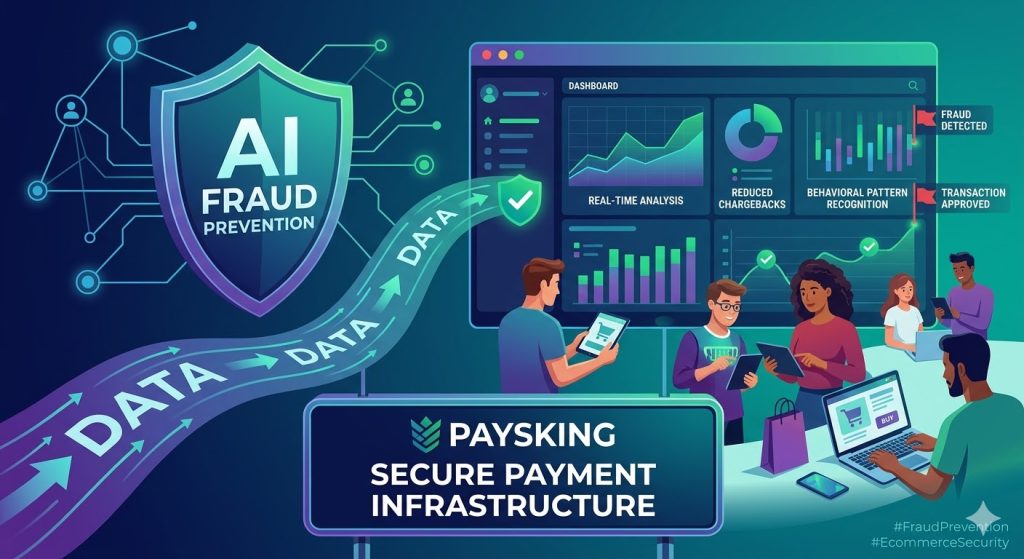
How AI is Transforming Fraud Prevention for U.S. E-commerce Merchants

The rapid growth of e-commerce in the United States has created enormous opportunities for businesses to reach customers worldwide. At the same time, this growth has introduced new challenges related to payment fraud, unauthorized transactions, and digital security threats. Fraud prevention has become one of the most important priorities for online merchants. Traditional fraud detection methods often rely on manual reviews or basic rule-based systems that struggle to keep up with increasingly sophisticated cyber threats. Artificial intelligence is transforming how merchants detect and prevent fraudulent transactions. AI-powered systems can analyze large volumes of payment data in real time, identifying suspicious activity before it impacts businesses or customers. With Paysking, merchants gain access to payment infrastructure designed to integrate advanced fraud prevention technologies while maintaining reliable and secure payment processing. Understanding how AI enhances fraud prevention can help e-commerce businesses protect revenue and build customer trust. The Growing Fraud Challenge in U.S. E-commerce Online commerce has expanded rapidly in recent years, bringing increased transaction volumes and new fraud risks. Rising Digital Payment Fraud Cybercriminals continuously develop new strategies to exploit vulnerabilities in online payment systems. Fraud attempts include stolen card information, account takeovers, and synthetic identities. Increased Transaction Complexity Global e-commerce introduces cross-border payments, multiple currencies, and diverse payment methods. This complexity creates additional opportunities for fraud. Businesses operating in complex payment environments often encounter challenges similar to those discussed in👉 https://paysking.com/top-payment-challenges-in-the-crypto-forex-gaming-industries/ Impact on Merchant Revenue Fraudulent transactions can lead to chargebacks, lost products, and additional operational costs. Reducing disputes and fraud risk is essential for maintaining payment stability. Limitations of Traditional Fraud Prevention Methods Traditional fraud prevention tools rely on static rules and manual processes. Rule-Based Detection Systems Older fraud detection systems use predefined rules to identify suspicious activity. While effective for simple cases, these systems struggle to detect evolving fraud patterns. Manual Transaction Reviews Human review processes slow down payment authorization and can negatively affect customer experience. Difficulty Detecting Sophisticated Fraud Modern fraud techniques involve complex patterns that traditional systems cannot easily detect. Advanced security infrastructure helps address these challenges, aligned with strategies described in👉 https://paysking.com/secure-payment-processing-fraud-prevention-paysking/ How AI Improves Fraud Detection Artificial intelligence introduces new capabilities for identifying and preventing fraudulent activity. Real-Time Transaction Analysis AI systems analyze payment data instantly, evaluating transaction characteristics such as location, purchase behavior, and device patterns. Behavioral Pattern Recognition Machine learning algorithms learn from historical transaction data to identify unusual activity. Continuous System Learning AI systems improve over time by analyzing new transaction data and adapting to emerging fraud techniques. These capabilities allow businesses to detect fraud earlier and reduce financial losses. Benefits of AI-Powered Fraud Prevention AI-driven fraud prevention systems provide several advantages for e-commerce merchants. Faster Fraud Detection Real-time analysis allows businesses to identify suspicious transactions before they are completed. Reduced Chargebacks Preventing fraudulent transactions reduces the likelihood of disputes and chargebacks. Chargeback reduction strategies complement fraud prevention efforts, as outlined in👉 https://paysking.com/chargeback-prevention-strategies-for-high-risk-businesses/ Improved Customer Experience AI systems allow legitimate transactions to proceed smoothly without unnecessary delays. Scalable Security AI-powered fraud prevention systems can process large volumes of transactions efficiently. Scalable infrastructure supports growing e-commerce businesses, similar to systems described in👉 https://paysking.com/scalable-payment-gateway-business-growth-paysking/ AI and Payment Infrastructure Integration Fraud prevention systems must integrate seamlessly with payment infrastructure. Modern payment platforms combine fraud detection tools with transaction monitoring systems. These platforms provide merchants with: Integrated payment platforms support efficient transaction management, similar to systems described in👉 https://paysking.com/payment-platform-for-businesses-paysking/ This integration improves both security and operational efficiency. AI Fraud Prevention in Global E-commerce AI is particularly valuable for businesses operating internationally. Cross-Border Fraud Detection AI systems analyze global transaction patterns to identify suspicious activity across regions. Multi-Currency Transaction Monitoring International payments require advanced monitoring to detect unusual currency conversion patterns. Global payment infrastructure plays an important role in supporting these capabilities, aligned with👉 https://paysking.com/payskings-global-coverage-seamless-cross-border-payment-solutions/ These systems help merchants operate securely in global markets. Role of AI in Payment Optimization AI not only improves fraud detection but also enhances payment performance. AI-powered payment systems can: Optimized payment processing helps businesses increase transaction success rates, as explained in👉 https://paysking.com/how-to-optimize-card-payment-processing-for-better-conversion-rates/ These improvements contribute to stronger payment reliability. How Paysking Supports AI-Driven Fraud Prevention Paysking provides payment infrastructure designed to support advanced fraud detection technologies while maintaining secure and efficient payment processing. Paysking enables businesses to: These capabilities help merchants protect revenue while maintaining smooth customer experiences. Paysking’s payment ecosystem supports modern e-commerce security requirements. The Future of AI in Fraud Prevention Artificial intelligence will continue transforming payment security in the coming years. Future fraud prevention systems will include: Businesses adopting AI-powered payment security today will be better positioned to protect revenue and maintain customer trust. AI-driven fraud prevention will become a standard component of modern payment infrastructure. Protect Your E-commerce Payments with Paysking Fraud prevention is essential for maintaining secure and reliable payment operations in the digital economy. With Paysking, businesses gain access to scalable payment infrastructure designed to support advanced fraud prevention technologies and secure transaction processing. Protect your e-commerce payments with Paysking and strengthen your business against evolving fraud threats. Hashtags #FraudPrevention #EcommerceSecurity #AIPayments #FintechInnovation #Paysking

How AI is Transforming Fraud Prevention for U.S. E-commerce Merchants Read Post »

Scroll to Top